
Traffic Assessment
Evaluate drivers' attention, reaction time, perception, and decision-making abilities to improve road safety and reduce accident risks.

COGPRO TRAFFIC
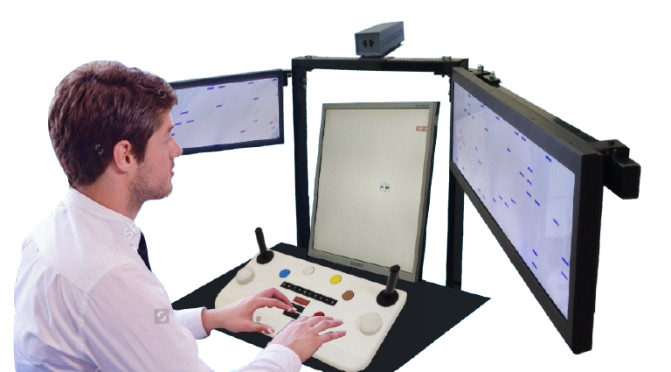
The COGPRO TRAFFIC is adapted for use in TRAFFIC psychology assessment. It is a psychometrically valid tool used for profile analysis. COGPRO TRAFFIC gives athletes a clear picture of their sport psychology profile in terms of both skills and personality. The COGPRO TRAFFIC is designed on a modular basis. Exact measurements of traffic related parameters such as reaction time, decision-making, reactive stress tolerance, coordination and peripheral perception are ensured to be precise to the millisecond. This is due to the range of peripheral devices that can be controlled by COGPRO.
Why This Solution?
- Accurately assess the cognitive and psychomotor capabilities of drivers.
- Ensuring that the driver possesses the necessary skills for safe driving.
- Conducting periodic assessments to monitor performance and efficiency levels.
- Contributing to improving road safety and reducing the risk of accidents.
- Identifying drivers' strengths and areas requiring development.
- Supporting decisions regarding hiring, accreditation, and professional re-evaluation.
- Enhancing drivers' competence and maintaining their professional readiness on an ongoing basis.
Core Technologies
Assessment Protocols
Basic Vigilance Test
Attention Evaluation over extended period of time. The term "vigilance" is used in psychology mainly to refer to the sustaining of attention in monotonous stimulus situations. Individuals performing certain monotonous activities do not always receive the arousal impulses that they need; this leads to mental fatigue and hence to a decline in performance efficiency The ability to maintain attention or sustained alertness in stimulus-poor situations is often important in safety-related jobs; it is therefore tested in safety assessments and traffic psychological investigations. The test is also used in sports psychology.
Interference Test
The Interference test Measures the color-word interference tendency, i.e. impairment of the reading speed or color recognition due to interfering information. This interference test is a sensomotor speed test that measures speed in reading words and naming colors. Afterwards it also measures speed under conditions of color/word interference. The ability to control cognitive interference is usually assessed by means of tasks involving at least two competing information-processing pathways. The task normally requires the respondent to use the less dominant information-processing pathway in the face of interference from the dominant pathway. This test measures both speed in reading words and naming colors and speed under conditions of color/word interference. This also yields information about the respondent's information processing and attention processes. The test is therefore particularly useful in sports psychology.
Pattern Recognition Test
This test measures focused attention and the visual differentiation of a relevant signal when distracted by other signals . Signal detection theory describes the perception of weak signals against a constantly changing background. The test is used mainly in personnel psychology (safety assessments).
Sequential Memory Test
Measures the storage capacity of spatial working memory. The Block-Tapping Test is regarded as the gold standard for testing spatial memory span. For more than three decades the validity of this test has been repeatedly confirmed in the neuropsychological literature and it has been widely used in clinical contexts.
Train Visual Memory Test
Assesses visual observational skill, obtaining an overview, visual orientation ability and speed of perception when driving. A quick and accurate grasp of complex visual situations is particularly important when driving. Because test presentation is adaptive, respondents are neither over- nor under-challenged and can therefore perform at their best. The test is used in traffic psychology and in safety assessments of professional drivers for personnel psychology purposes.
Visual Memory Test
Assesses short-term visual memory. This is the ability to remember visual information in the short term. In everyday life we often need to orientate ourselves using visual cues. Visual short-term memory is used in psychology